Monitoring Plan Vida Nativa GS1, Community

Participatory Carbon Program: Targeted at all communities in the project area.
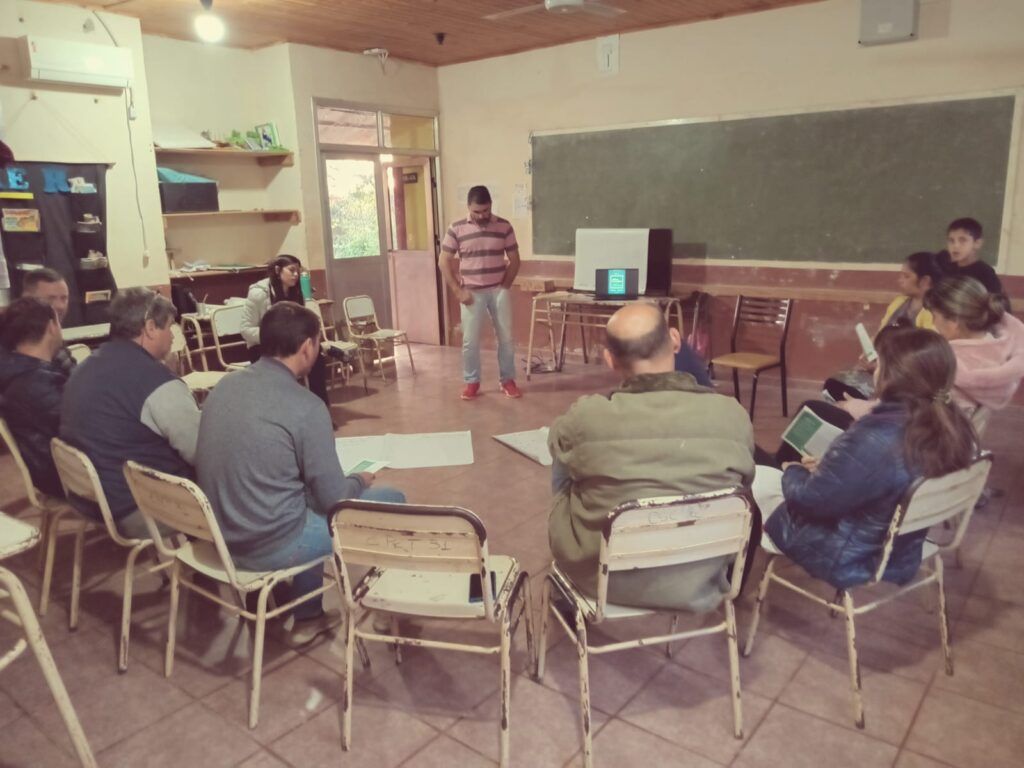
Monitoring Strategy: A participatory management evaluation was conducted between the community, EPET N° 31 of Cruce Caballero, EP N° 482 of Cruce Caballero and its cooperative, and the Recreational, Sports and Cultural Committee of Cruce Caballero. Satisfaction survey. Management evaluation with the control group. Annual management evaluation reports. Various communication instances were implemented, with the first development projects defined and designed by the community; a specific gender focus was applied in programs with more than 500 participants.
Other indicators to be evaluated in due course:
Improvement in the quality of life of the population in the project's area of influence.
Establishment of a culture of good participatory practices based on sustainability and equity.
Substantive participation of women.
Number of participants in general.
Ra 'ÿi Community Garden in the Tekoa Alecrin Community
Monitoring Strategy: Follow-up sheets. Field visits and visual records of progress. Interviews with community leaders. Observation of tools and supplies transferred. Brief survey. Satisfaction survey. Management evaluation with the control group. Management evaluation together with the Tekoa Alecrín community. Annual. Program designed; budget allocated, and community representative from Tekoa Alecrin assigned to the program.
Future indicators:
Increase in the number and variety of species cultivated.
Increase in the number of people working in the community gardens.
Increase in the size of community gardens.
Improvement of food security in the village.
Promotion of climate change adaptation in agricultural production.
Óga Project: Targeted at the Tekoa Alecrin Community
Monitoring Strategy: After the construction of the housing modules, the follow-up includes maintenance of the houses, conditions of community housing, construction capacity acquired, and other indicators worked on. Satisfaction survey. Management evaluation with the control group.
Management evaluation together with the Tekoa Alecrín community (Annual):
Quantity and quality of the houses built. In process, two families will be the first defined beneficiaries.
Capacities transmitted to the community in modular construction to date.
Other indicators to be evaluated in due course:
Satisfaction of Tekoa Alecrin with the OGA project.
Quantity and quality of the houses built.
Overcrowding in the houses.
Flooding or leaks in the houses built.
Women Farmers Program of the Nueva Esperanza Cooperative:
Monitoring Strategy: The follow-up will include analysis of equipment maintenance; in addition, the creation of monitoring tools to identify problems and intermediate impacts of the program, including quantities and production time. Satisfaction survey. Cross-checking of management reports from Nideport and the cooperative regarding production, sales, needs, and problems raised during the period. Annual (in progress). Equipment and training provided.
Impact assessment currently in place:
Increase in production line speed.
Increase in the number of products manufactured.
Adequate supply to the markets in which it operates.
Opening of new markets.
Increase in the cooperative's profits.
Strengthening of the gender perspective in agricultural production.
Don Antonio: Native Medicinal Species Nursery with an Ecotourism and Educational Approach.
Targeted at: All communities in the project area.
Monitoring Strategy: Management indicator analysis. Satisfaction survey. Management evaluation with the control group. Annual management evaluation reports (non-measurable). Program designed, managers recruited, and first training underway.
Number of medicinal plants in production.
Number of people who visited the nursery.
Number of plants produced in the nursery and used for reforestation.
Construction of a database on medicinal plants and their uses.
Activities in the Project's Area of Influence: All communities in the project area.
Monitoring Strategy: Management indicator analysis. Satisfaction survey. Management evaluation with the control group. Annual management evaluation reports (non-measurable).
Measurement of training for on-site work activities.
Measurement of gender safeguards.
Measurement of non-discrimination safeguards.
Number of people with job opportunities. First activities conducted with 5 long-term workers from Forestal Belga facilities; first job interviews conducted within the community.
Number of people trained: 100 participants.
Participation rate of local communities: 50% of positions filled by local communities, including positions of responsibility in the area, such as field manager.
Artículos Relacionados

Sustainability - October 13, 2024
The Argentine Carbon Exchange will market Nideport credits in Argentina.
Nideport selected the Argentine Carbon Exchange (BACX) to market 50,000 credits (verified carbon units, VCU’s) from the future issuance of the Selva Paranaense Vida Nativa project under the Verra standard, an ambitious project covering 24,643 hectares in the province of Misiones, aimed at the restoration of degraded forests.

Technology - October 6, 2024
We partnered up with IOV Foundation enhance sustainable impact
The partnership between Nideport and Fundación IOV also allows for the possibility of transferring technologies, providing technical assistance, conducting studies and carrying out research to promote the use of decentralized and technological solutions to improve traceability and transparency in projects with social and environmental impact.

Communities - April 3, 2024
2023 Communities Summary
Desde el área de relación con las comunidades de Nideport, hemos logrado avances significativos en los programas, proyectos y acciones llevados a cabo durante el período 2023.
Sustainability - August 27, 2023
Participative Carbon Budget
Nideport continues with the Participatory Carbon Budget, a program in which local communities benefit from the issuance of carbon credits and participate in decision making.